




11 mars 2026Winter service in historical perspective
Winter service provided by the Icelandic Road and Coastal Administration has developed significantly over the past decades. In earlier times, snow clearing on mountain roads in midwinter was often considered unnecessary and wasteful, and such routes were sometimes open for only a few hours at a time.
Today, winter service is a fundamental prerequisite for economic activity, regional development, and job security, and there is a growing demand for increased service levels.
In this article, Einar Pálsson, Head of the Road Service Department, reviews this development in broad terms.
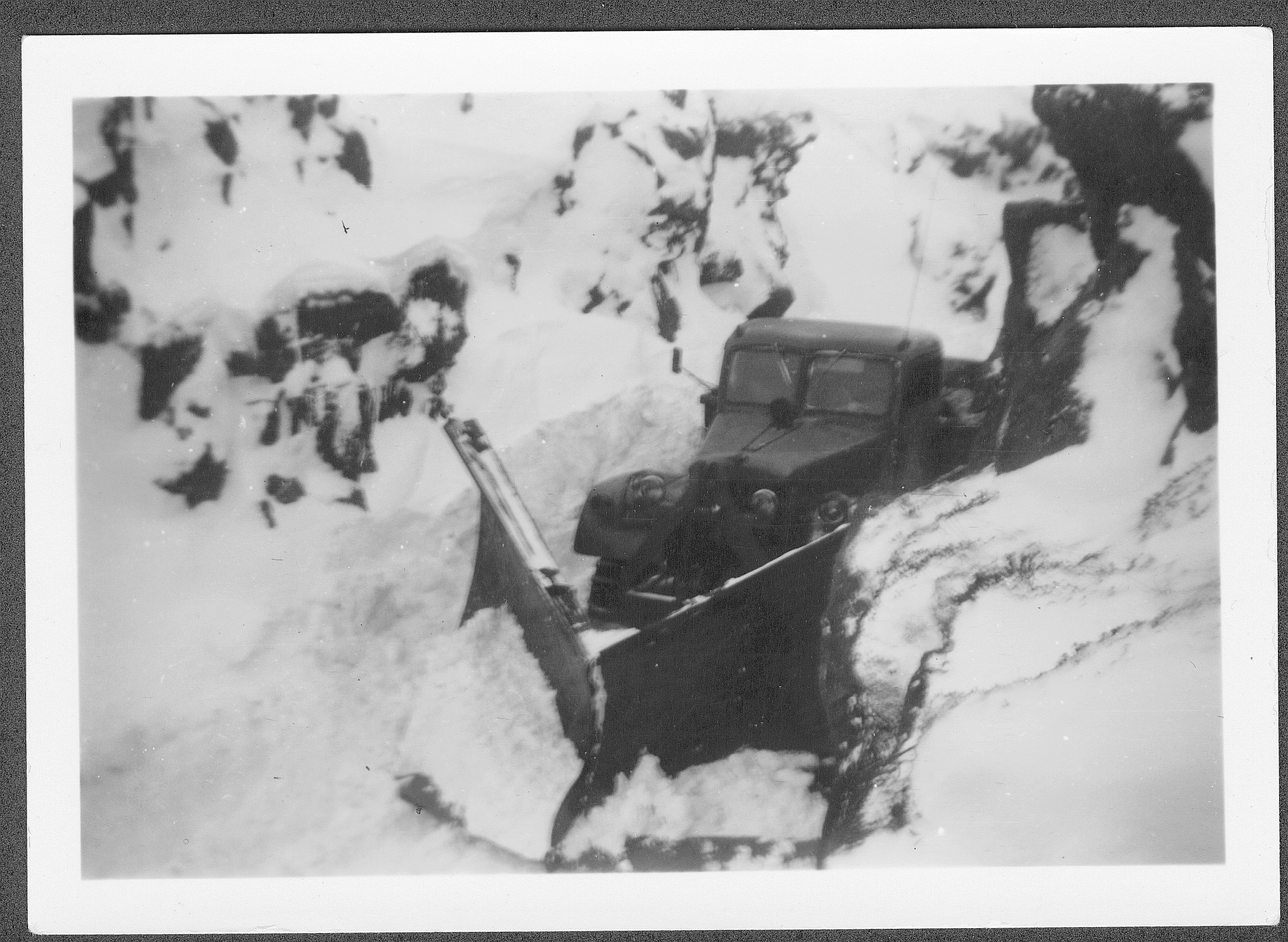
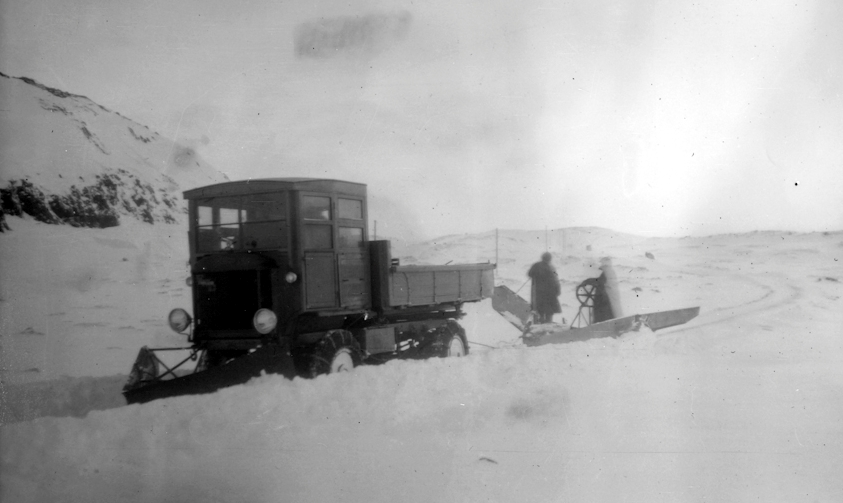
) Við Stefánshöfða hjá Kleifarvatni 1954. Snjómokstur með norskum spíssplógi framan á Diamond trukk Vegagerðarinnar.
Ever since the advent of the automobile age in Iceland, the need for snow clearing has been a topic of debate in the Icelandic media. In urban areas, some argued that snow removal was an unnecessary expense and even suggested that residents should clear the streets adjacent to their own properties.
Outside urban areas, opinions were divided on whether it was worthwhile to invest in snow clearing on mountain roads during midwinter, when severe weather and snowstorms often meant that roads remained passable for only a few hours at a time. Some also argued that snow clearing damaged the roads by creating high snowbanks, and proposals were made to compact the snow using rollers rather than clearing it with snowplows.
An article published in the newspaper Dagur on April 17, 1952, discussing matters from an agricultural assembly, stated that “it would be fortunate for the road authorities if a cheaper method of snow removal than the one currently in use could be found, or if it were possible to move vehicles over the snow rather than driving through it.”
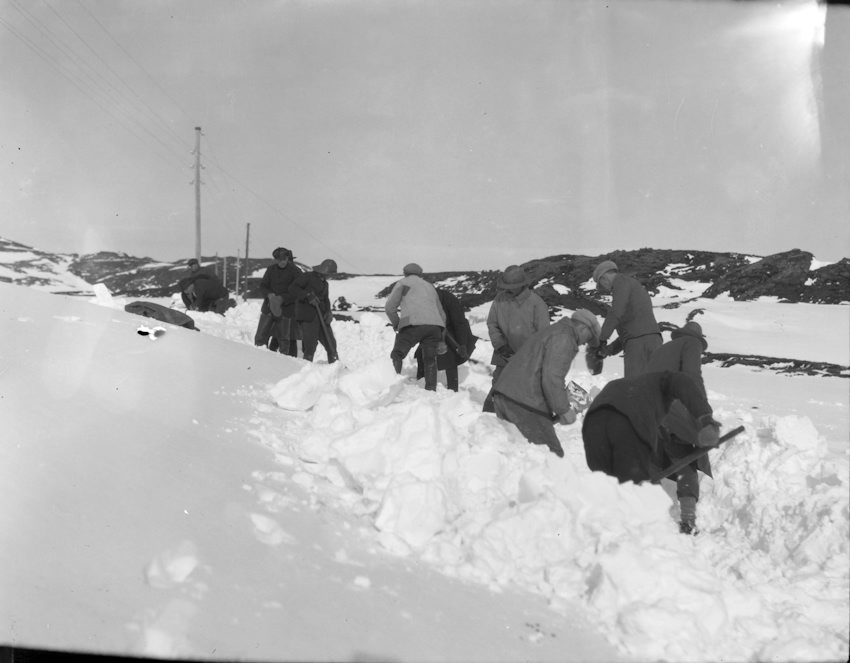
Snjómokstur. Væntanlega á Hellisheiði. Alla vegana ellefu karlar við snjómokstur. Í baksýn eru rafmagnslínur. Myndin birtist á bls. 101 í bókinni Baráttan við Fjallið, Kaupfélag Árnesinga 1930-1990 eftir Erling Brynjólfsson.
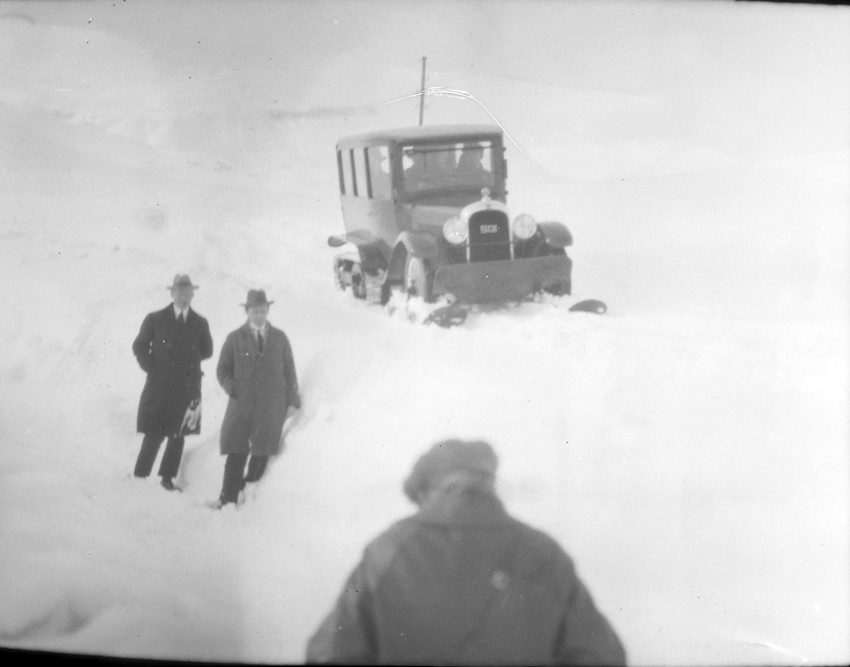
Citroën snjóbíll á beltum og skíðum.* Snjómokstur. Fyrir miðri mynd sést einn af frönsku snjóbílunum sem keyptir voru af Vegagerðinni til landsins árið 1927.** Tveir menn á gangi í átt að ljósmyndara. Sést í bakið á manni sem er að ganga frá ljósmyndaranum. Myndin er að öllum líkindum tekin á Hellisheiði. Merkt Bílar, tækni o.fl. * Jakob Hálfdánarson 21.12.2009. ** Jón Gísli Högnason: Ysjur og austræna, II. bindi, bls. 36.
Food Transport to Rural Areas Drives Demand for Increased Snow Clearing
Until the mid-20th century, the need for snow clearing in Iceland was primarily linked to transport within urban areas and the delivery of milk to towns. During severe winter conditions, when roads were impassable, milk was for example transported by sled from Mosfellssveit, Kjalarnes, Álftanes, and other nearby areas.
Transport routes to the South were also essential for securing milk supplies. The eastern route—then known as Suðurlandsbraut, running via Lögberg to Kolviðarhóll and onwards across Hellisheiði—was considered a major obstacle. In January 1937, for instance, 28 workers spent three days clearing snow from the road between Lögberg and Kolviðarhóll, after which snow vehicles took over transport to Kambabrún. The mountain pass was impassable for other vehicles.
In Morgunblaðið on January 26, 1949, snow clearing became a topic in a political dispute over which routes should be prioritized for winter maintenance. The debate centered on whether to focus on the Þingvellir route, the Krísuvík route, or Hellisheiði. It was proposed that the road authorities should have full responsibility for deciding which routes to clear, in order to maintain the safest possible transport links between the capital and rural areas supplying essential food products. As noted, “they are best placed to assess which routes are most passable and are in close contact with the drivers operating transport vehicles.”
In Tíminn on May 10, 1949, the managing director of Kaupfélag Árnesinga highlighted that transport relied on the Krísuvík route for at least 80 days each winter, as other mountain routes were often impassable. While emphasizing the importance of keeping routes open, he also addressed a common misconception about costs:
“The more effort is put into keeping routes open and roads usable, the greater the actual savings.”
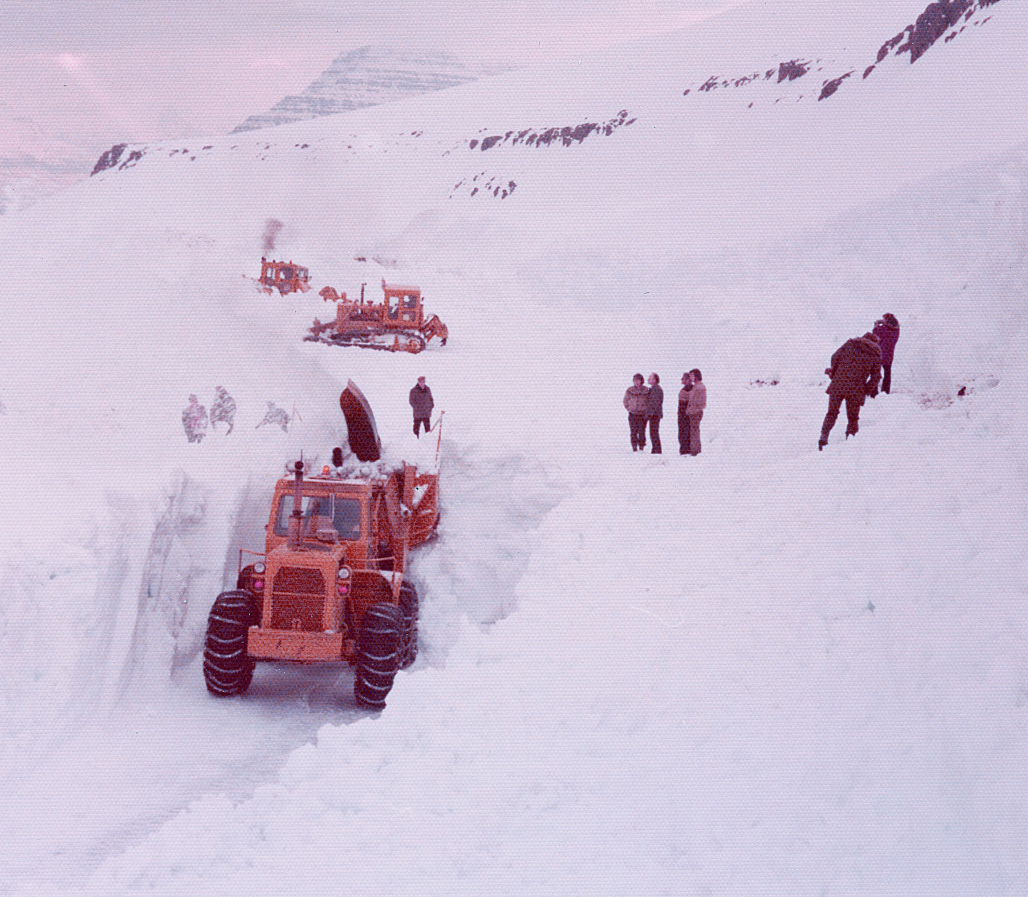
Snjómokstur í Oddsskarði árið 1975.
snjómokstur snjóplógur
Significant Costs for Municipalities
Sigurður Jóhannsson, Director of Roads, wrote in Nýi Tíminn on February 28, 1957, that the Icelandic Road Administration sought to keep some of the country’s busiest main roads open during winter, as resources and conditions allowed. He also noted that, according to road legislation, snow clearing on national roads could be made conditional on partial or full reimbursement from local districts. This provision applied to all national roads except the most heavily trafficked ones.
This legal provision remains in full effect today and has, in recent decades, been reflected in the so-called “shared-cost snow clearing rule”, which applies to national roads classified as connector roads serving settlements up to the third innermost inhabited farm.
It is clear that municipalities—and initially also agricultural producers, particularly dairy farmers—bore a significant share of the cost, alongside state funding allocated to snow clearing. Around the mid-20th century, public roads were categorized into national roads, county roads, and municipal roads. Municipalities were fully responsible for the latter, while county committees managed county roads.
County roads were financed through a dedicated fund, to which each municipality contributed based on population, along with property-based road taxes. The state then contributed an equivalent amount. During difficult years, the cost of snow clearing was often seen as excessive, which led to increased efforts in subsequent decades to improve road design so that snow would accumulate less easily.
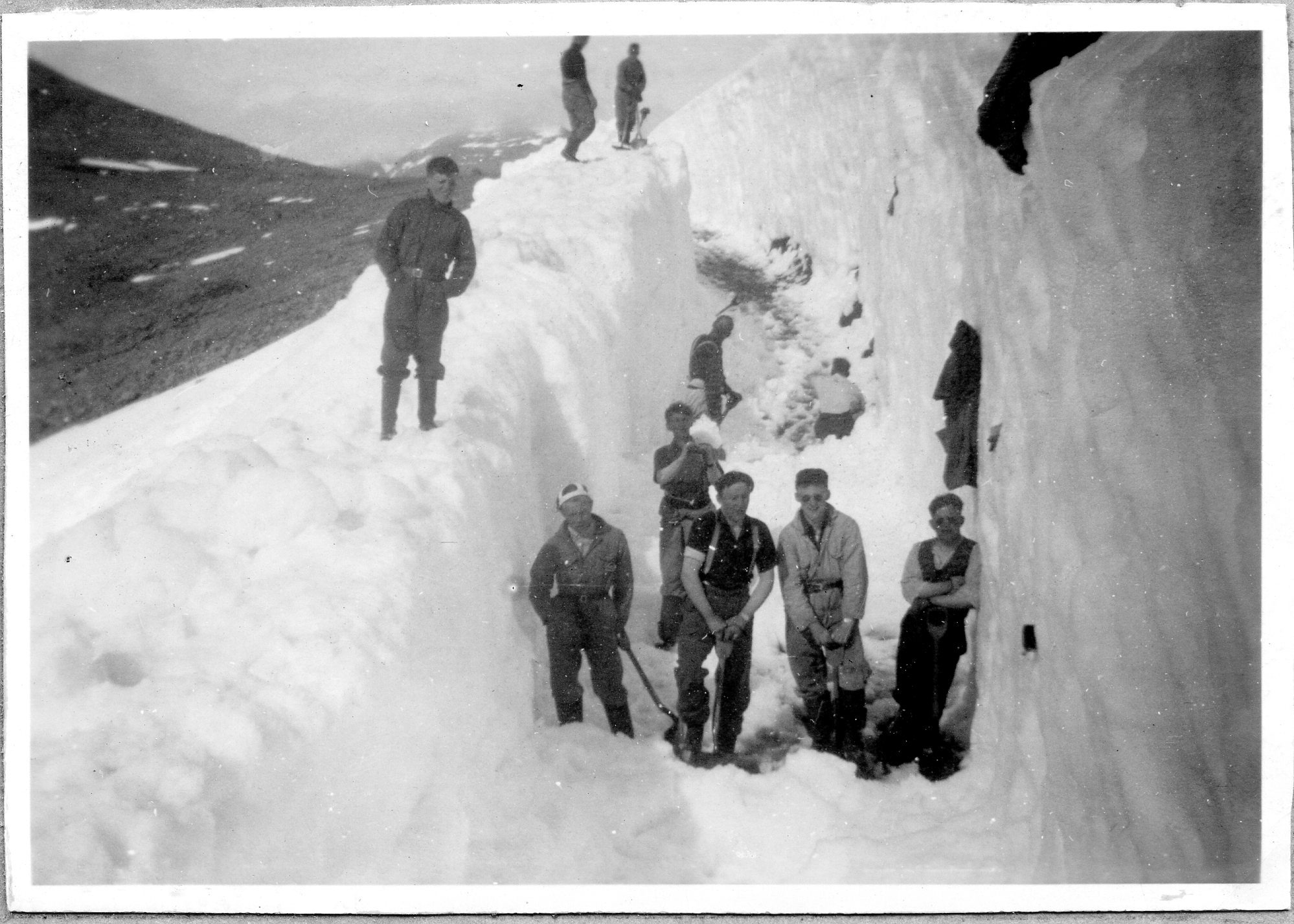
Myndamappa 9 Ísafjarðasýsla Breiðadalsheiði 1944. Snjómokstur í júlí byrjun allt að 20 manns.
Development of Snow Clearing from 1968 to 2025
1968 – Daily Snow Clearing to Keflavík
In 1968, snow clearing was carried out every day of the week on main roads from the capital to Keflavík, into Hvalfjörður, and east to Hvolsvöllur. From there to Vík, snow clearing took place five days a week, as it did from Hvalfjörður to Borgarnes.
From Vík to Klaustur, roads were cleared twice a week, as was the route from Borgarnes to Akureyri and Ólafsfjörður. Ólafsvík and Stykkishólmur were also maintained with twice-weekly clearing.
In East Iceland, snow clearing was carried out five days a week between Egilsstaðir and Reyðarfjörður, twice weekly to Fáskrúðsfjörður, and once a week to Borgarfjörður eystri and from Fáskrúðsfjörður to Breiðdalsvík.
Other roads serving settlements were cleared once a week, for example from Norðurárdalur to Búðardalur, Króksfjarðarnes, and Hólmavík. The road between Varmahlíð and Sauðárkrókur was cleared five times a week, while from Sauðárkrókur to Siglufjörður clearing took place once a week.
The route from Akureyri to Húsavík, via Tjörnes and all the way to Raufarhöfn, was also cleared once a week.
At this time, the Ring Road had not yet been completed, and parts of the country were effectively isolated during winter. For example, snow clearing between Þórshöfn and Vopnafjörður took place once a week, as did the route between Höfn and Djúpivogur.
In the Westfjords, roads were cleared once a week between Ísafjörður and Súðavík, as well as between Þingeyri and Flateyri. Bíldudalur, Tálknafjörður, and Patreksfjörður were connected by weekly snow clearing, and routes across Kleifaheiði via Barðaströnd to Vatnsfjörður were also maintained.
Overall, it can be said that most settlements were connected at least once a week by cleared lowland routes to nearby harbours, ensuring a minimum level of accessibility during winter.
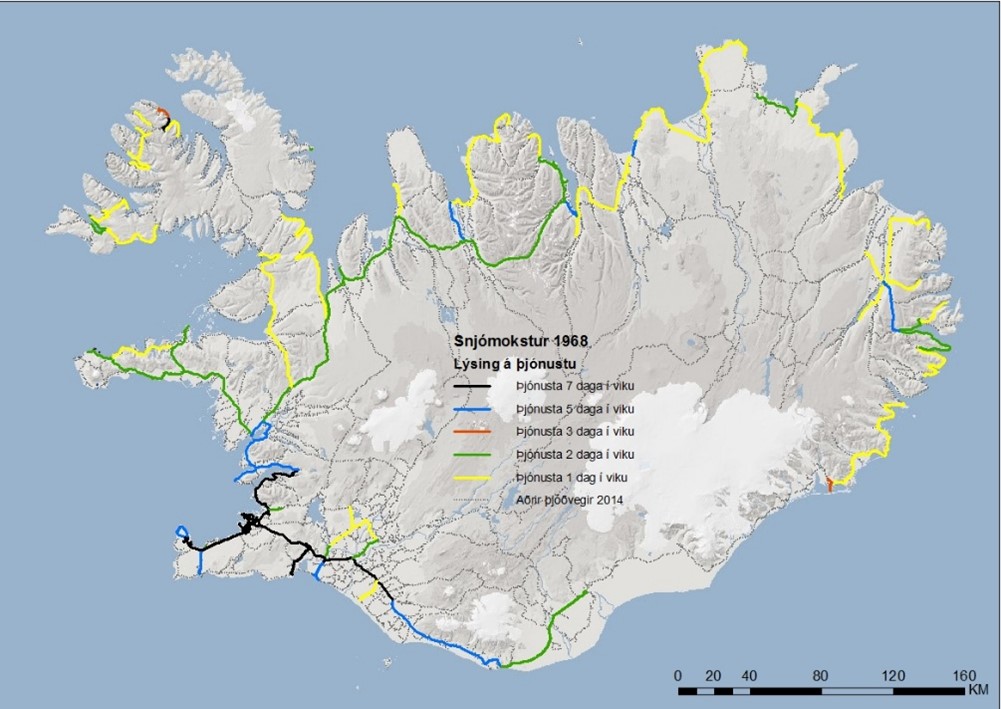
Snjómokstur 1968
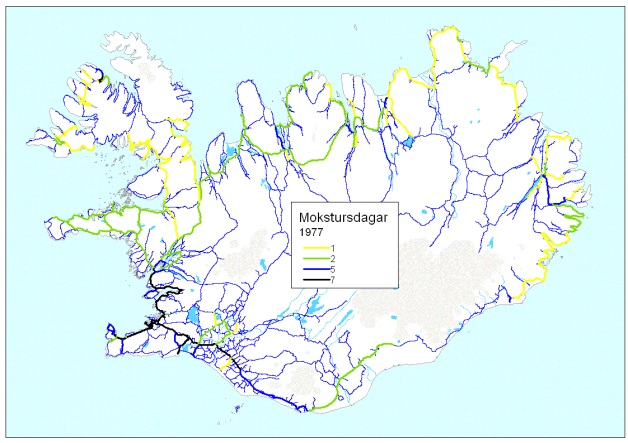
Snjómokstur 1977
Limited Changes Until 1977
In the following decade, there were no major changes to snow clearing policies. Some routes were upgraded from once-a-week to twice-a-week clearing, for example the road to Siglufjörður and the route between Akureyri and Húsavík.
In addition, once-a-week clearing was introduced on the Northeast Road between Húsavík and Vopnafjörður. In the Westfjords, snow clearing was extended between Króksfjarðarnes, Reykhólar, and further west towards Klettsháls.
Increased Service in the 1980s
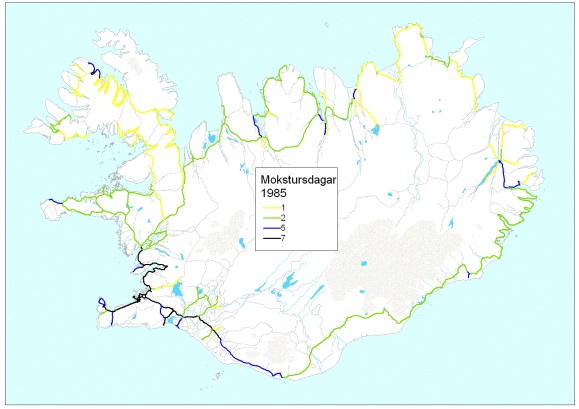
Significant changes to snow clearing in rural Iceland took place during the 1980s. A connection to Southeast Iceland was established with the construction of the Skeiðará bridge in 1974, and by 1985, twice-weekly snow clearing had been introduced along the route from Kirkjubæjarklaustur all the way east to Reyðarfjörður.
The bridge over Borgarfjörður was completed in 1981, enabling daily snow clearing (seven days a week) to Borgarnes. In the Westfjords, the road over Steingrímsfjarðarheiði was completed in 1984, and once-a-week clearing was introduced on the route from Hólmavík via Djúp to Ísafjörður. Prior to this—and until as late as 1999—ferry services across Ísafjarðardjúp operated up to twice a week year-round.
The road via Mikladalur and Hálfdán, between Patreksfjörður and Bíldudalur, was upgraded to twice-weekly snow clearing in 1985.
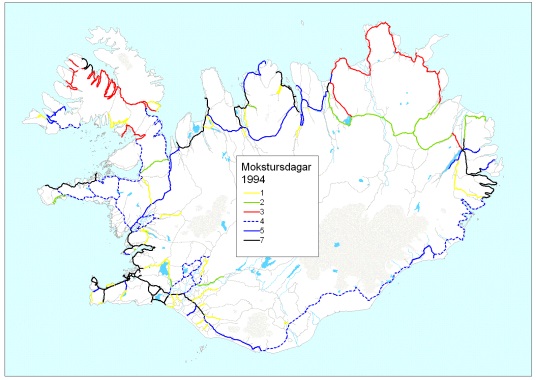
Snjómokstur 1994
The Entire Ring Road Cleared by 1994
By 1994, the entire Ring Road was maintained with snow clearing frequencies ranging from one to seven days per week. The final sections to be upgraded were the stretch between Mývatn and Egilsstaðir, with twice-weekly clearing, and the road over Breiðdalsheiði, with once-a-week clearing.
At the same time, two- to five-day clearing was introduced on the Northeast Road, connecting from the Ring Road via Köldukinn, around Tjörnes and Melrakkaslétta, across Langanes and Vopnafjörður, and back to the Ring Road.
The Ring Road from Vík eastwards to Breiðdalsvík was upgraded to four-day clearing, and from there to Reyðarfjörður to daily (seven-day) service.
The route from Borgarnes to Akureyri—and further on to Húsavík—was improved to five-day service, as were the roads to Siglufjörður and Grenivík. The Westfjords also saw increased service levels, with four-day clearing to Hólmavík and three-day clearing across Ísafjarðardjúp. The route between Patreksfjörður and Bíldudalur was upgraded to five-day clearing, while the road from Patreksfjörður to Brjánslækur was cleared four days a week.
In northern Snæfellsnes, roads between Stykkishólmur, Ólafsvík, and Rif received daily (seven-day) clearing. Routes from Borgarnes via Kerlingarskarð and Fróðárheiði were upgraded to four-day service.
Snow clearing in rural inland areas also increased, for example in the upper districts of Árnessýsla and Borgarfjörður.
Seven-Day Service Across Much of the Ring Road Around the Turn of the Century
Just before the turn of the century, seven-day snow clearing service had been established across South Iceland from Reykjavík to Egilsstaðir, as well as from Reykjavík through North Iceland to Siglufjörður and Húsavík.
Seven-day service was also introduced to settlements on the Snæfellsnes peninsula from Borgarnes. In the Westfjords, service levels within key economic areas between settlements were increased from three to four days per week up to daily (seven-day) service.
The Djúpvegur route to Ísafjörður and the Northeast Road were both upgraded to five-day service, while service on the Ring Road between Mývatn and Egilsstaðir was increased from two days to four days per week.
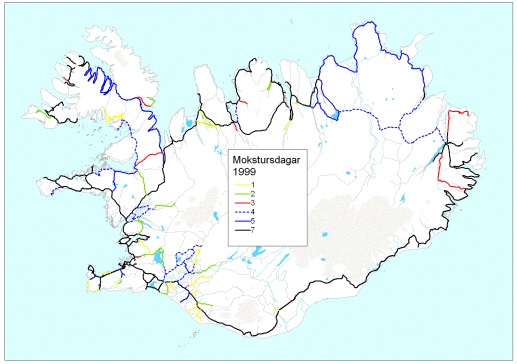
Snjómokstur 1999
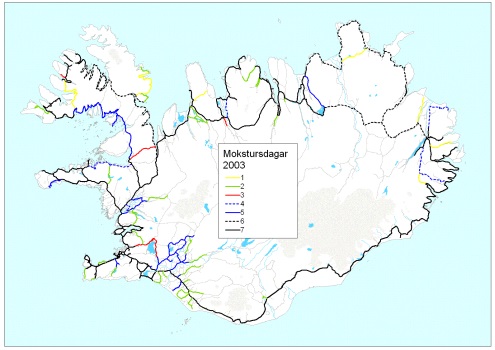
Snjómokstur 2003
Increased Land Transport After the Turn of the Century
Further improvements were made in 2003, with more long-distance routes upgraded to six- to seven-day winter service. For the first time, Vestfjarðavegur—the route from Kollafjörður west to Vatnsfjörður—received winter maintenance, five days a week.
By this time, land transport had increased significantly, following the privatization of the state shipping company in 1992. Market demands called for shorter delivery times, improved service levels, and reduced inventory of consumer goods. The expansion of the road network and enhanced winter service reflected these changing needs.
Coastal shipping by the major shipping companies was discontinued at the end of 2004. Since then, domestic transport in Iceland has been primarily carried out by road.
In the following years, 2006 and 2008, additional routes were upgraded to seven-day service, largely reflecting the standards that remain in place today.
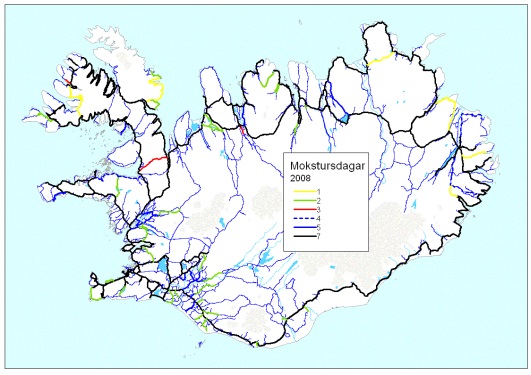
Snjómokstur 2008
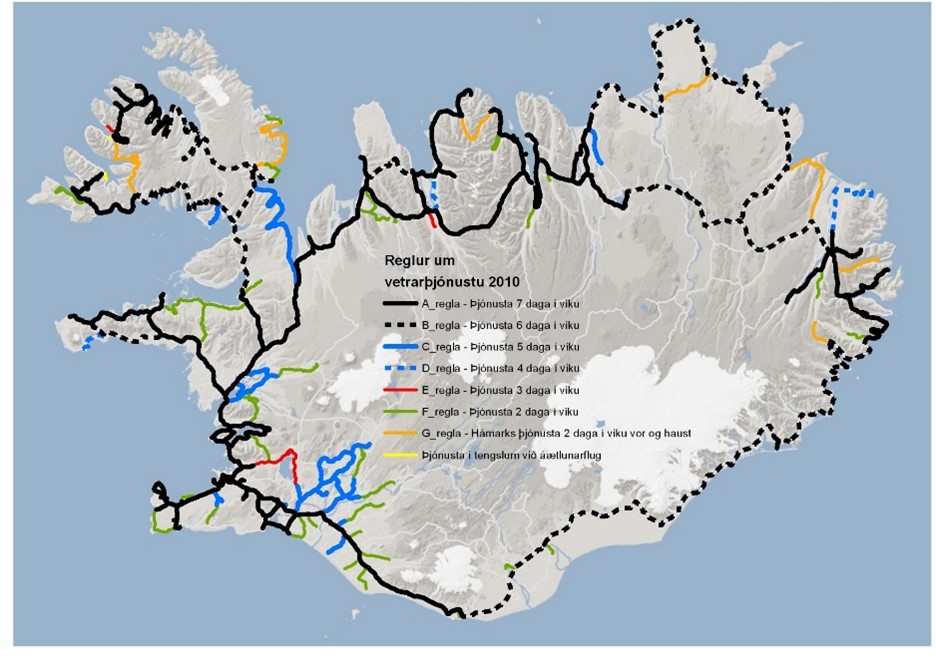
Snjómokstur 2010
Reduced Service During the Financial Crisis
Following the financial crisis in 2010, winter service levels were significantly reduced to meet national budget constraints, and society proved willing to adapt.
Many long-distance routes were reduced from seven-day service to six days per week, while others were scaled back from seven days to five or even three days. For example, the Þingvellir road across Mosfellsheiði was reduced from seven-day to three-day service.
Minor adjustments were made to the rules in 2013, and by 2014 the effects of the financial crisis had largely subsided.
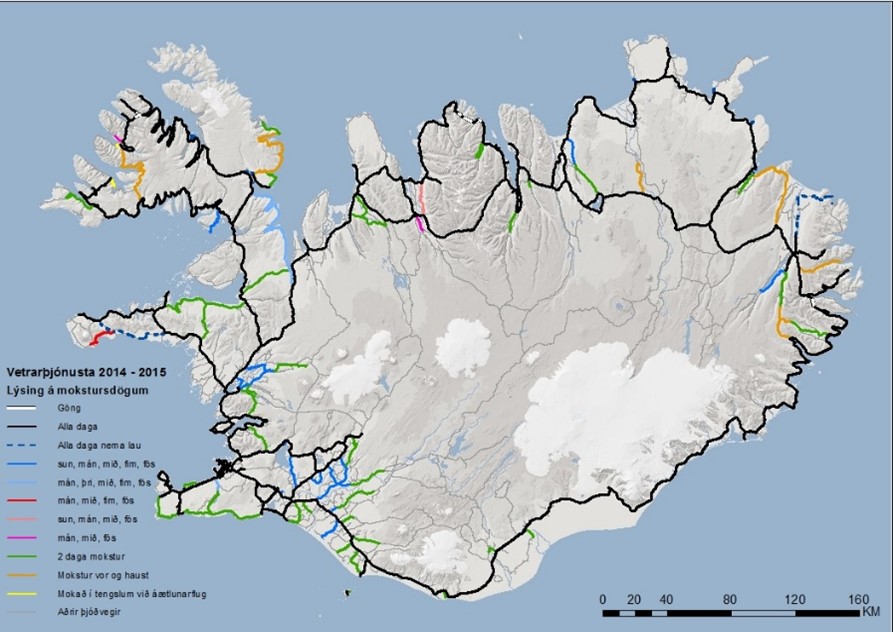
Snjómokstur 2014-2015
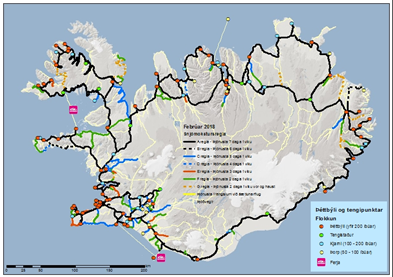
Snjómokstur 2018
Current Situation
The current winter service regulations date from 2018. While they largely reflect the societal demands at that time, they no longer fully address the changes that have taken place over the past eight years.
Among the key developments are increased economic activity, growing traffic volumes, the expansion of tourism, changes in settlement patterns, municipal and school mergers, and increased road freight transport.
The service also faces ongoing challenges due to weather variability and changing conditions, which require greater capacity to apply anti-icing measures on increasingly longer road sections in order to improve road safety.
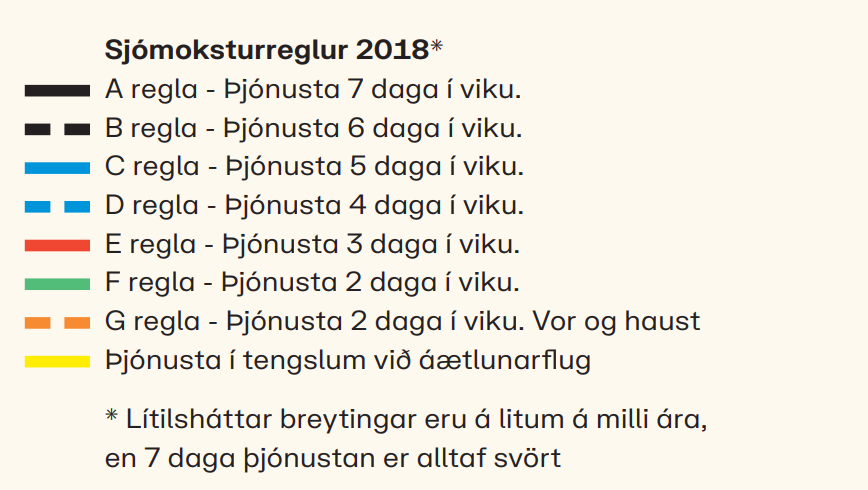
Snjómokstursreglur. Lítilsháttar breytingar eru á litum milli ára, en 7 daga þjónusta er alltaf svört.
Key Priorities for Future Winter Service
For winter service regulations to better reflect the needs and expectations of society, four main areas need to be addressed:
-
Extended service hours in the morning to ensure safe and reliable conditions for school transport
-
Extended service hours on long-distance routes into the evening to support freight transport
-
Increased use of anti-icing measures on roads
-
Revision of the current partial-clearing rules, including clearer schedules and improved anti-icing practices
Summary
The review shows that, both in the past and today, there has been a strong societal understanding of the importance of investing in snow clearing and anti-icing measures to keep national roads open and safe.